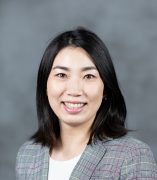
Miya Kang, DDS, PhD
Assistant Professor
Oral Biology
Contact
Building & Room:
Room 519E
Address:
801 S. Paulina St., Chicago, IL 60612
Email:
Related Sites:
About
Dr. Kang earned her DDS from Kyushu Dental University in 2012 and completed her PhD in Dental Science and Certificate in Prosthodontics at Kyushu University in 2017. She then pursued postdoctoral training at the UIC College of Dentistry from 2018 to 2022, where she gained expertise in extracellular vesicle biology, osteoimmunology, and regenerative medicine. As a clinician-scientist, her research focuses on the immunological regulation of bone and craniofacial tissue repair, aiming to understand how inflammatory and systemic conditions impair healing and to translate these insights into innovative regenerative therapies.
Selected Publications
Kang M, Huang CC, Lu Y, Shirazi S, Gajendrareddy P, Ravindran S, Cooper LF. “Bone Regeneration is Mediated by Macrophage Extracellular Vesicles.” Bone. 2020 Dec;141:115627. doi: 10.1016/j.bone.2020.115627.
Kang M, Huang CC, Gajendrareddy P, Lu Y, Shirazi S, Ravindran S, Cooper LF. “Extracellular Vesicles From TNFα Preconditioned MSCs: Effects on Immunomodulation and Bone Regeneration.” Front Immunol. 2022 May 2;13:878194. doi: 10.3389/fimmu.2022.878194.
Huang CC, Kang M, Leung K, Lu Y, Shirazi S, Gajendrareddy P, Ravindran S. “Micro RNA based MSC EV engineering: Targeting the BMP2 cascade for bone repair.” Front Cell Dev Biol. 2023 Feb 8:11:1127594. doi: 10.3389/fcell.2023.1127594.
Education
- Kyushu Dental University, Fukuoka, Japan, DDS, 2012
- Kyushu University, Fukuoka, Japan, PhD in Dental Science, 2017
- Kyushu University, Fukuoka, Japan, Certificate in Prosthodontics, 2017
- UIC College of Dentistry, Postdoctoral Fellow, 2018–2022
Research Currently in Progress
Tissue regeneration is a finely orchestrated process involving dynamic crosstalk among multiple cell types, with immune cells playing a key role in its regulation. In the Kang Lab, we ask a central question: “How do immune and skeletal cells coordinate to repair tissue, and why is this process disrupted in systemic and chronic conditions?”.
One of our current research projects investigates how type 2 diabetes alters the immunomodulatory functions of macrophages, including extracellular vesicle signaling and inflammatory responses, leading to impaired bone repair and craniofacial regeneration. We employ advanced cellular and molecular techniques, multi-omics analyses, and high-resolution tissue imaging to understand the mechanisms underlying disrupted immune–skeletal interactions, and apply regenerative medicine and bioengineering approaches to develop innovative and translationally relevant strategies aimed at improving healing outcomes for patients.